Research Question : How can Artificial Intelligence help preserve traditional5 Indian
fabrics?
Name : Mr Yash Arhatia (Founder, Kinkhab)
Date : 24/03/2026
ABSTRACT
Traditional Indian textiles represent a rich cultural heritage shaped by centuries of historical craftsmanship, the weaving art and artistic expression. However in the recent years, these textiles have experienced a decline into people’s wardrobe and daily apparel due to factors such as industrialisation, rapidly evolving consumer trends, digitalisation and growing influence towards western fashion trends. This research examines and analyses the potential role of Artificial Intelligence in addressing these challenges and revitalizing traditional and authentic Indian fabrics into the modern fashion industry.
The study adopts a qualitative and analytical methodology, which relies on secondary data
sources. It deeply explores the integration of AI in the fashion industry through it’s
appropriate applications. The certain findings listed in the upcoming sections, suggest that AI
can help adapt traditional textiles into the contemporary preferences.
Furthermore, the research also highlights the cultural and economic significance of reviving
ancient Indian textiles, while also emphasising the challenges with the technological
accessibility and it’s societal divide. Overall, the study concludes that this modern
advancement can create a firm bridge between heritage and innovation.
INTRODUCTION
1.1 India’s ancient textile heritage
The history of Indian textiles started from 6,000 years back. These Indian handcrafted
textiles have been surviving from centuries back under the circumstances of globalisation
and industrialisation. Indian cloth hand-embroidery has also gained fame by it’s certain
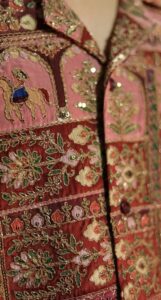
weaving styles by intricate handwork. Fabrics like Khinkhab, Bandhani, Patola, Banarasi and
prints like kalamkaari, sanganeri, ajrak have shaped the tapestry of ancient Indian fashion. In
a country like India, various other religions too have their own rituals and beliefs of wearing
some fabrics at particular instants of time, which has played a key role in observance of
Indian fabrics in the religious aspect of fashion too. (Victoria & Albert Museum UK, 2014)
1.2 Decline of Traditional Indian fabrics
During the years of Industrial Revolution, the use of traditional Indian fabrics were heavily
impacted. The inexpensive substitute of these ancient fabrics changed the scenario of Indian
textiles. Designers also started to make dresses out of the fabrics that are either artificial or
machine-made, due to which the use of ancient Indian fabrics got stipulated upto those who only valued the Indian handicrafts.
1.3 Integration of Artificial Intelligence in Fashion
Looking onto this decline of such fabrics, integration of modern technology and artificial
intelligence can help preserve them and also foster it into the modern fashion world. In the
current scenario there are already some existing ways in which AI has been integrated with
fashion like, digital textile printing, growth of e-commerce, tech infrastructure for stitching,
virtual cloth samples etc. The current phase of these textiles in contrast to the upcoming
future tech-integrated model can be called as a big transition stage for these Indian fabrics
(Kalrav Bodh Sinha, 2025).
1.4 Research Gap between Technology and Indian fabrics
In the current fast-paced fashion world, designers launch the designs and it disappears after
gathering attention. Yet, the technology driven abstract forms are posing a challenge.
Local artisans lack the ability to cater their handicrafts to new markets and are forced to find
a low unskilled employment which doesn’t values their work. This shows a profound gap in
terms of advanced technology with the authentic Indian fabrics in the fashion industry, which
further leads the artisans and the local weaving communities face several challenges.
However, no major analysis has yet taken place which is specifically focused on fostering
this circumstance.
1.5 How can AI help in preserving these textiles?
Hence, the above given circumstances lead to the need of integration of AI into the process
of revival of these ancient Indian fabrics. For instance, Generative AI tools can be
successfully applied to co-create the art patterns of the fabrics (Fu et al., 2025). AI-powered
chat bot and virtual assistants can enhance the consumer experiences and context-aware
narratives tailored to individual users with their respective demands (Ferracani et al., 2024).
AI can also assist in preserving Indian textiles by creating virtual platforms that allow global
audiences to explore and learn about cultural textiles (Pakinee Ariya, 2025).
LITERATURE REVIEW
2.1 Historical Significance of authentic Indian fabrics
Since the period of Mughals in India, royal workshops known as Karkhanas produced luxury
textiles and these workshops used to employ the skilled artisans under royal patronage
(Archana Kumari Sah, 2023).
Each Indian state had their unique fabrics with unique embroidery designs, being culturally
connected. The country has diverse textile forms, where different regions specialise in
distinct designs and patterns.
Even after the British Colonial exploitation weakened, these contemporary fabrics became
central to the Swadeshi movement and the revival of indigenous crafts. Indian handlooms
retained their cultural significance and became the symbol of national identity (Vivek Kumar,
2021). Moreover, these fabrics have travelled from centuries till the present; carrying the
tapestry of the actual Indian essence of fashion.
2.2 Current Challenges in the Textile & Fabric Industry
The 3rd Round of Handloom Census, reveals that 99% of weavers earn less than ₹5,000 per
month (Handloom Census, 2019-20). However, these weavers belong to the marginalised
and vulnerable groups and usually face existential threats. The unfair condition has left
93.3% of weavers and artisans struggling with meager income and domestic market
pressure, further pushing them towards unemployment and migration (Geetha Sunil Pillai,
2025).
Rapid modernisation with advanced technologies, have significantly reduced the demand of
handwoven fabrics, leading to declining wages and employment opportunities for weavers
(Tanushree Shaw, 2015).
The dependence onto the intermediaries or middlemen often exploits the price, where
middlemen captures the larger share, while the artisans receive minimal compensation
(IJRAR, 2024).
Growing popularity of western clothing styles have crucially reduced the demand for
traditional Indian textiles. Furthermore, the upcoming younger generation doesn’t give value
for continuing traditional weaving practices (Amir Hussain, 2024).
2.3 Current Scenario of Technology in Fashion Industry
The fashion industry on global level, has increasingly integrated digital technologies such as
3D garment simulation systems, which gives buyers the efficiency to modify clothing designs
before physical production (Kyung Hee Choi, 2022).
It also encompasses, VTO systems and intelligent cloth matching technologies where
consumers have already expressed interest in trying on specific garments. Their primary
objective is to provide a near realistic try-on experience enabling users to better evaluate
products (Caixia Chen, 2024).
Particularly, Indian fashion industry is experiencing a slow and steady transformation in
terms of technologies such as 3D design tools, digitalised manufacturing processes, virtual
try-ons. But these innovations allow brands to shorten the cloth development cycle and bring
the collections in the market significantly faster than older methods. (Akhil George & Shilpa
Phadnis, 2024).
METHODOLOGY
3.1 Research Approach
This research paper adopts a qualitative and analytical research pattern approach to
examine the potential role of AI in reviving traditional Indian fabrics. It primarily focuses on
understanding the historical significance of these textiles, current obstacles faced by the
industry and the growing potential of technology. Since, it involves cultural heritage with
modern innovations, a qualitative approach is considered appropriate to delve deeper.
Hence it is based on analytical interpretation of existing knowledge with the data source
citation rather than primary data collection. The motivation behind the research is also driven
by the increasing interest amongst emerging technology and the enthusiasm within the
fashion entrepreneurs in combining traditional ethics with modern trends.
3.2 Data Sources
The research majorly relies on secondary data sources to examine both historical and
contemporary dimensions of Indian fashion. Information has been collected from variety of credible resources including academic papers, journals, scholarly articles and some books.
These sources provide insights into the evolution of Indian textiles with their cultural,
economic and social importance. Some additional information has been gathered from
reputable online publications, museum records, fashion reports, etc. Such diverse citations
allows the research to combine perspectives from multidisciplinary resources, overall making
it comprehensive to understand the integration of traditional fabrics into emerging
technological advancements.
3.3 Analytical Framework
The analytical framework of this research is designed to examine and understand the
relationship between the current scenario of the fashion industry with the technological
developments. It begins by reviewing existing literature on the historical aspect of authentic
Indian fabrics in various regions of the country. Then also examines the current challenges
faced by the textile sector, including declining artisan incomes, reduced demand for
traditional fabrics with changing consumer preferences.
Following this, the research also evaluates the broader technological transformation with it’s
future opportunities. This includes examining how digital tools and technological innovations
are influencing the current scenario of authentic Indian fabrics. Majorly through this
framework, the research aims to explore and emphasise on how the upcoming trends of
artificial intelligence can be integrated into the process of revival of authentic Indian fabrics.
FINDINGS / ANALYSIS
4.1 AI for Fashion Trends Prediction
Traditionally trend forecasting relied heavily on fashion experts, designers, fashion critics,
who analyse the runway shows and the changing consumers’ preferences.
With the development of artificial intelligence, fashion brands can now analyse vast amount
of data from various digital means and can process the information, to predict the upcoming
and ongoing trends (Hatim Kagalwala, 2024).
Additionally, AI-based forecasting helps fashion brands respond quickly to changing
consumer demands. It helps in reducing production risks, optimise inventory management
and introducing new aligned collections.
4.2 AI assisted designing for traditional textiles
One of the most significant advantages of AI-assisted fabric designing is it’s ability to
augment the human creativity rather than replace it. Designers can input certain variables of
the fabric design and the AI tools can generate a range of potential design patterns. These
systems use machine learning algorithms to generate new clothing designs by analysing the
input given by the designer with the fashion images’ references. They assist designers by
generating variations in silhouettes, colours, patterns, different geometrical arrangements
and contrast (Woojin Choi et al., 2023).
This technique in particular, can generate new design’s adaptations that incorporate
elements of traditional handloom or craftmanship into contemporary fashion designs. It
allows the traditional fabrics to be reinterpreted with respect to the ongoing trends. It will also
reduce the need for repeated manual stitching and prototyping which allows designers to
experiment with different combinations.
4.3 AI in Protecting Artisan Livelihoods
As discussed in the above sections, artisans and weavers face a lot of challenges like, lower
profit margins, consumer shift in their preferences, increasing modernisation, western
fashion aesthetics, limited market access, etc.
Certain AI driven tools, such as demand forecasting and digital platforms may help artisans
adapt their designs or products to changing consumer needs and expand their market reach.
It can also improve the artisans’ market accessibility by connecting them directly with global
consumers (Saili Sawantt, 2025).
Also, the e-commerce selling opportunities through technology integration can reduce their
dependencies on intermediaries and provide fair compensation for their hardwork.
DISCUSSION
5.1 Cultural Preservation
These ancient fabrics represent cultural identity, symbolism, craftsmanship and tradition,
which reflects the social and cultural narratives of the communities that produce them. When
they get extinct from the mainstream of fashion market, the cultural significance and
traditions associated with them also is at the risk of being lost. But when they are
incorporated into contemporary outfits, they gain renewed visibility and demand. With
respect to digital implementation which has been discussed, it plays a crucial role in
storytelling strategies to the global audience. Also, modern consumers are increasingly
interested in the stories behind products, including their origin, making processes and their
cultural value. Hence through digital platforms, these stories can be highlighted and the
awareness can be increased. When the international audience engages with these stories, it
contributes to the broader recognition of Indian heritage.
5.2 Strengthening of the Artisan Community
When traditional fabrics gain renewed demand through modern fashion integration and
global exposure, the value of the artisans’ handwork becomes more visible.
Increased awareness through the digitalised sources, may encourage brands and markets to
provide fairer compensation to artisans for their work.
As mentioned in the previous sections, by enabling direct connections between artisans,
designers, entrepreneurs and the consumers, with them may help ensure that they receive
equitable recognition with wages, and proper acknowledgement for their contribution.
5.3 Economic Impact
These fabrics being reintroduced into contemporary fashion industry, have the potential to
attract both domestic and international consumers who increasingly value authenticity,
sustainability and cultural craftmanship. As global demand for ethnically produced and
sustainable fashion continues to grow, traditional Indian textiles may gain stronger
positioning with international markets, thereby increasing export opportunities. The market
for Indian textiles is projected to grow at a 10% CAGR to reach US$ 350 Billion by 2030,
with exports expected to reach US$ 100 Billion (IBEF Textile Report, Nov 2025).
Furthermore, the alignment of AI with the ancient fabrics can create products the appeal to
global consumers while maintaining cultural ethnicity. In addition, traditional textiles often rely
on environment friendly processes. Hence, promoting these textiles within modern fashion
systems can therefore support both economic growth and environmental sustainability,
which overall leads to the expansion of this sector of the economy.
5.4 Challenges and Risks
Despite the potential benefits, several challenges and risks must also be considered.
● One of the primary concerns is the limited technological access and lack of digital
literacy amongst the artisan communities, the digital infrastructure, training and
technological resources remains limited.
● The broader digital divide that exists between technologically advanced urban
sectors and traditional rural communities, may lead to struggle in participating
efficiently into the process of integration of technology. It risks them to be excluded
from the benefits of technological innovation.
● Increased automation and AI driven processes could unintentionally replace certain
forms of human labor. It can potentially lead to reduced employment opportunities as
well, for the artisans and can contribute to marginalisation.
CONCLUSION
India’s traditional textile heritage represents one of the most significant cultural and artistic
legacies in the world. For centuries, these fabrics have reflected the social, cultural and
economic identity of different communities. However, in recent decades these traditional
fabrics have experienced a noticeable decline due to factors such as industrial mass
production, changing consumer preferences and the growing influence of western fashion
trends.
This research overall, explored how the integration of AI within modern fashion may offer
potential solutions to these challenges. The findings suggest that AI technologies can assist
the fashion sector in various ways. Through AI-assisted design tools and predictive systems,
traditional fabrics can be reinterpreted within contemporary fashion contexts, allowing them
to remain relevant to modern consumers. Beyond the design innovation, the research also
highlights the broader cultural and economic implications of integrating technology with
traditional craftsmanship.
However, the study also acknowledges several challenges associated with technological
integration, including limited technological access among artisans, digital inequality and
concerns regarding automation replacing human labor.
Overall, the research suggests that when applied thoughtfully, AI can act as a bridge
between heritage and innovation. By combining AI based advancements with traditional
textile knowledge, the fashion industry has the potential to preserve cultural heritage while
also creating new economic opportunities for artisans and strengthening the sustainability of
India’s textile ecosystem.
Finally, as technology continues to reshape industries across the world, it’s thoughtful
application in the textile sector presents an opportunity not only to preserve cultural heritage
but also to build innovative solutions that connects tradition with the future of fashion.